The Interrogator's Notebook

Join a former interrogator in asking the hard questions.

Blog from the Author of The Interrogator's Notebook

Questions about enhanced interrogation techniques and black op military prisons have made us more aware than ever of the ethical treatment of prisoners and the role of interrogation in providing intelligence to our armed forces. This blog will present news and points of view in this ongoing debate. Please feel free to share your thoughts as well.

Martin Ott


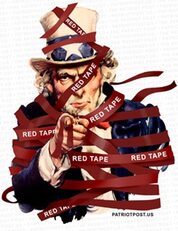
Red Tape as a Torture Device at Guantanamo Bay

Posted May 17, 2013


Many of us have pictures in our head about the prisoners in Guantanamo Bay, and some of the enhanced interrogation techniques that were exposed there.

However it may be that red tape is the worst torture device of all in the war against terror. Journalist Max Fisher in the Washington Post breaks down the 4 different ways that prisoners can leave the detention facility in his article Why hasn't Obama closed Guantanamo Bay. The first two paths to leave Gitmo - civilian trial and military tribunal - have been blocked by Congress.

Another path for the detainees - to send them into a foreign country's legal system - can only be done if it can be proved they aren't being tortured. The 4th route, that applies to more than half of the 166 detainees, would be to find a new country to send prisoners to if they have already been exonerated of any wrongdoing. No one is saying that it will be easy to do. However, it also wasn't easy to put bounties on the heads of terrorists (in some cases up to $25K), and to pay for the information that led to so many false arrests at Gitmo.

The hunger strikes by Gitmo prisoners have grabbed the media spotlight, for now.  Obama and our government should do more, and the American people should hold them more accountable to do so.

Interrogation's Greatest Hits

Posted April 15, 2013

For many years, playing loud music to keep prisoners awake has been in the repertoire of CIA and military interrogators. Here is a reported playlist:

  • "All Eyes on Me," Tupac
  • "America," Neil Diamond
  • "American Pie," Don McLean
  • "Baby One More Time," Britney Spears
  • "Babylon," David Gray.
  • "Bodies," Drowning Pool
  • "Born in the USA," Bruce Springsteen
  • "Bulls on Parade," Rage Against the Machine
  • "Click Click Boom," Saliva
  • "Cold," Matchbox 20
  • "Die MF Die," Dope
  • "Dirrty," Christina Aguilera
  • "Don't Gimme No Lip," Pearl Jam
  • "Enter Sandman," Metallica
  • "F**k Your God," Deicide
  • "Hell's Bells," AC/DC
  • "Killing in the Name," Rage Against the Machine
  • "I Love You," from the "Barney and Friends" children's TV show
  • "March of Pigs," Nine Inch Nails
  • "Meow Mix" jingle
  • "Raspberry Beret," Prince
  • "Real Slim Shady," Eminem
  • "Sesame Street," theme song from the children's TV show.
  • "Shoot to Thrill," AC/DC
  • "Somewhat Damaged," Nine Inch Nails
  • "Staying Alive," The Bee Gees
  • "Swan Dive," HedPE
  • "Take Your Best Shot," Dope
  • "These Boots Were Made for Walking," Nancy Sinatra
  • "We Are the Champions," Queen
  • "White America," Eminem.

I wonder if this was someone's ITunes playlist? Have I considered queueing this up for my downstairs neighbors blasting Bjork on a Sunday morning? Well, we all have our weak moments.

Read more about this at ABC NewsThe Guardian,  KVUE.comMental Floss, Mother JonesOMG, Scholars and RoguesSpiegel and Spin

The Interrotron - Technology for Intense On-Camera Interviews

Posted March 15, 2013


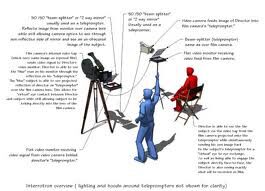
Oscar winning documentary filmmaker Errol Morris has a secret weapon for unsettling interviews: The Interrotron. Developed with production designer and frequent collaborator Steve Hardie, the technique allows an interviewee to maintain eye contact with Morris so that there is an intensity and honesty to what appears on film.

This technique replicates the intensity of the eye contact in an intense interview session, and allows us to see more genuine reactions to questions. Even artists are looking for enhanced techniques to obtain the truth. 

Can Entertainment Change the Rules of Interrogation?

Posted March 2, 2013


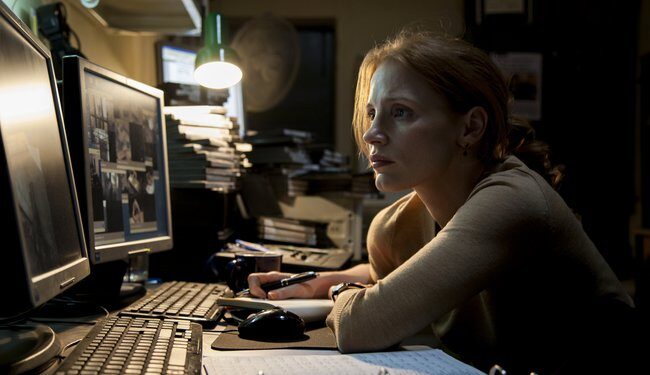
In a recent article in the Atlantic, journalist and author Joshua E. S. Phillips writes about how the real legacy of the controversial film Zero Dark Thirty may be in interrogation rooms as the harshness of the interrogations depicted in the film has registered with the American public and, more importantly, policy makers. 

in 2007, Supreme Court Justice Scalia cited an episode of 24 in which agent Jack Bauer saves Los Angeles from terrorists as proof that torture works. The TV series 24 was also used in interrogation training during the Bush/Cheney years.

I can understand how the perceptions of the American public can be swayed by dramatized interrogations, but one would hope that our elected and military leaders would do more homework and crack a book, such as Fear Up Harsh by Tony Lagouranis and How to Break a Terrorist by Matthew Alexander that demonstrate the ineffectiveness of enhanced interrogation techniques. 


Yale University Enters the Interrogation Debate

Posted February 23, 2013


Yale University recently announced that it will host the US SOCOM Center of Excellence for Operation Neuroscience. Led by Doctor Charles Morgan III, Green Berets and other Special Ops will learn the methods of Modified Cognitive Interviewing, a system that builds positive rapport between the soldier and the interviewee, and has been suggested to be more reliable than enhanced interrogation techniques.

Sounds positive, right? However, the research will focus on the New Have immigrant community, drawing the ire of students of alumni who think that Yale has crossed a line. Given our checkered history of our major universities in supporting CIA research in the 1950s and 1960s, a bit of skepticism is warranted. Also, should it be the role of our institutions of higher learning to train our military personnel?

Brennan Flip Flops on Interrogation During Hearings

Posted February 14, 2013

John Brennan, nominee to head the Central Intelligence Agency, flip flopped during recent congressional hearings on his support of enhanced interrogation techniques. Previously, he had stated that the now-defunct interrogation program "saved lives," but now classifies the program as a "low point in our history." 

If it wasn't for the drama surrounding the drones program, much more would be made about Brennan's assertions that he had gotten misinformation and that he had misgivings that he'd privately confided to agency colleagues. This is a man who looked the other way at potential abuses. Should we really trust that he won't do what's politically expedient, even sacrificing lives, when push comes to shove?

Did the U.S. Keep a Human Library?

Posted February 5, 2013


One of the problems with black ops prisons - aside from enhanced interrogation techniques - has been the ability of the U.S. to keep prisoners detained for long periods of time, without charging them with crimes. In effect, it created a human library, a way for our intelligence agency to be able to reference and cross reference facts.

This topic came up recently during a forum at the American Enterprise Institute when three CIA veterans watched the film Zero Dark Thirty and tried to separate fact from fiction. William Saletan at Slate Magazine gives a great overview of this discussion in his article The Case for Torture, The U.S. has continued this policy even as it its own intelligence members have commented that it has dubious impact on the mission in the war on terror. Libraries are for books...not people.

Zero Dark Thirty Makes Case for Enhanced Interrogation

Posted January 24, 2013


I have been having a tough time sorting through my feelings about Zero Dark Thirty. There were well-drawn scenes coupled with unbelievable scenes (e.g. all prisoners spoke English).

In the end, it's important to understand that this is a work of fiction and that there are better documented ways to get confessions from torture.

I believe that the film didn't ask enough of its characters to question whether or not it was ethical to torture prisoners, or if it led to actionable intelligence.

Former CIA Interrogator Looks for Deception in Lance Armstrong Interview

Posted January 20, 2013


Former CIA Interrogator Phil Houston, coauthor of Spy the Lie, points out some moments in Lance Armstrong's interrogation with Oprah that could indicate that he didn't come completely clean. From awkward laughs to pauses to scratching his head to placing truths in what could be lies, Houston looks for deception.

Listen to video here from CBS morning news.

Can a Waterboarding Play Set Be Far Behind?

Posted January 18, 2013

For family fun, you may want to check out the Playmobil Security Check Point. It teaches kids the lessons of a high-surveillance society, although it doesn't seem like you can take the tiny shoes off the characters. Makes me wonder what's next?


View older posts »